What Can Cats Eat? The Complete Food Safety Guide Every Cat Owner Needs

What Can Cats Eat? The Complete Food Safety Guide Every Cat Owner Needs

What Can Cats Eat? The Complete Food Safety Guide Every Cat Owner Needs

Most of your cat's diet should be a nutritionally complete cat food, but you can safely offer small amounts of plain, cooked chicken, turkey, fish, eggs, and certain fruits like blueberries, strawberries, bananas, and apples as occasional treats. However, never feed your cat chocolate, grapes, raisins, onions, garlic, macadamia nuts, alcohol, or xylitol — these are toxic and can cause life-threatening illness. The key is knowing exactly what's safe, what's harmful, and how much your cat can handle.

What Do Cats Like to Eat? 

Cats are obligate carnivores by nature, meaning their instincts are wired to hunt and eat protein-rich prey like birds, small rodents, and insects. This is fundamentally different from dogs, which are omnivores capable of comfortably eating both plant and animal foods. Cats crave meat above all other foods, particularly high-protein, moist options like cooked chicken, turkey, salmon, or tuna.

Related reading: Can Cats Eat Dog Food?

When researchers studied feral cat diets in Australian grassland habitats, they found that cats naturally consume small prey animals — not grains, fruits, or vegetables. This explains why cats often show little interest in vegetarian foods and overwhelmingly prefer lean, moist meats.

However, there's also huge variation in individual taste preferences. Some cats love bananas (especially chilled), while others ignore them. Some cats will lick cheese, while others refuse dairy entirely. Others are fascinated by corn or polenta. These preferences are highly individual, but the biological baseline remains clear: cats are designed for protein, not plant matter.

Pro Tip from Pawswing: If you're wondering what your cat likes, try offering plain, cooked chicken or turkey in small amounts. This is the most universally appealing safe food for cats and rarely fails to engage their interest.

What Fruits Can Cats Eat?

What Human Food Can Cats Eat? Vet-Approved Foods for Occasional Treats

While cat food should always be your pet's primary diet, many people foods are safe for cats as rare, small treats. According to veterinary nutritionists and the American Veterinary Medical Association (AVMA), the following human foods are generally safe for cats in moderation:

Safe Proteins (Best Options)

  • Cooked plain chicken or turkey: Lean, boneless, skinless, unseasoned poultry is the top safe protein for cats
  • Cooked fish: Small amounts of plain, cooked salmon, tuna, or cod are safe and provide omega-3 fatty acids
  • Cooked eggs: Scrambled or boiled eggs are safe and offer protein-packed nutrition
  • Lean deli meats: Small bits of turkey or chicken deli meat (not beef or pork) are acceptable occasionally, but avoid high-salt varieties

Safe Pantry Foods

  • Pumpkin: Plain, cooked pumpkin (not pie filling) is rich in fiber and can help with digestion
  • Oats: Easy to prepare and high in protein per calorie
  • Brown rice, barley, millet, couscous: Cooked grains are safe, but may need to be mashed first for easier digestion
  • Whole wheat breadcrumbs: OK in small amounts

Safe Vegetables

  • Cucumber: Fresh, plain
  • Steamed broccoli: Plain, no seasoning
  • Carrots: Cooked, plain
  • Peas: Cooked, plain
  • Asparagus: Steamed, unseasoned

Safe Fruits (Occasional Treats)

  • Blueberries: High in antioxidants, safe whole or mashed
  • Strawberries: Rich in vitamin C and fiber, but high in sugar — offer occasionally
  • Bananas: High in potassium but very high in sugar — offer thin slices rarely
  • Apples: Safe if peeled and seeds removed
  • Watermelon: Seedless, remove rind
  • Cantaloupe: Fresh, plain
  • Blackberries: Safe and healthy in moderation

Related reading

Can Cats Eat Bananas? Safe Treats vs. Feline Nutrition Realities
Can Cats Eat Cheese? A Professional Feeding Guide for Cat Owners
Can Cats Eat Chocolate? No, Absolutely Forbidden
can cats eat strawberries or blueberries?

Safe Dairy (Very Rarely)

  • Cheese: Tiny pieces occasionally, but most cats are lactose-intolerant and can have digestive upset

    Important Rule: Treats (including human foods) should make up no more than 10% of your cat's daily caloric intake to ensure they receive the full benefits of their nutritionally balanced cat food diet.

Can Cats Eat Kiwi? Human Food for Cats

Should Cats Eat Fruit? 

The short answer: Cats don't need fruit, and it's not a natural part of their diet, but certain fruits can be safe as rare, small treats. Here's why:

Why Fruit Isn't Necessary for Cats

Cats are obligate carnivores by evolution. Their digestive systems are designed to extract nutrients from animal protein, not plant carbohydrates. Fruits contain high levels of sugar and carbohydrates, which cats don't metabolize efficiently. Too much fruit can lead to digestive upset, weight gain, and blood sugar fluctuations.

Which Fruits Are Safe (and Which Are Dangerous)

SAFE Fruits (in tiny amounts):

  • Blueberries, blackberries, cranberries — high in vitamins, fiber, and antioxidants
  • Strawberries, raspberries — rich in vitamin C and fiber, but high in sugar
  • Bananas — high in potassium, but very high in sugar
  • Apples — safe if peeled and seeds removed
  • Watermelon — seedless, rind removed
  • Cantaloupe — plain, fresh
  • Pineapple — fresh only, never canned (too much sugar and additives)

TOXIC Fruits (NEVER feed):

  • Grapes and raisins — cause acute kidney failure
  • Cherries — pits and stems contain cyanogenic compounds

Fruits should make up less than 10% of your cat's daily caloric intake, typically amounting to just 2–3 small pieces as an occasional treat, 1–2 times per week at most. Always remove seeds, pits, and rinds before serving.

What Cats Should NEVER Eat

The following foods are toxic to cats and can cause serious illness, organ failure, or death:

  • Chocolate — contains th eobromine and caffeine, which cause heart problems, seizures, and death
  • Grapes and raisins — cause rapid kidney failure
  • Onions and garlic — damage red blood cells, causing anemia
  • Macadamia nuts — cause gastrointestinal upset and weakness
  • Bread dough — expands in stomach, causes alcohol poisoning from yeast
  • Alcohol — even small amounts cause severe poisoning
  • Xylitol — artificial sweetener in gum and candy, causes rapid blood sugar drop and liver failure
  • Raw fish — can contain parasites and bacteria

If your cat eats any of these, contact your veterinarian or an emergency pet poison hotline immediately.

What Veterinary Science Recommends

The American Association of Feline Practitioners (AAFP) and the World Small Animal Veterinary Association (WSAVA) both emphasize that a nutritionally complete, species-appropriate cat food should be your pet's primary diet — and that human foods should only be offered as rare, small treats.

Peer-reviewed veterinary research confirms that cats benefit most from high-protein, low-carbohydrate diets with adequate moisture, and that filling cats with plant-based foods (including fruits and grains) does not provide meaningful nutritional value for their species-specific needs.

The AVMA also stresses that treats should never exceed 10% of daily caloric intake, as overfeeding treats is a primary driver of obesity and malnutrition in domestic cats.

Connecting Nutrition to Grooming: Why Brushing Cats Is Important

A cat's nutritional status is directly visible in their coat, skin, and grooming behavior. Cats fed adequate protein, essential fatty acids, and calories maintain glossy, full coats and exhibit active, vigorous self-grooming throughout the day. Overweight cats, or those fed poor-quality diets high in carbohydrates, often struggle to groom their backs and hindquarters — areas where matting, skin irritation, and parasite buildup are most common.

This is where the tools at Pawswing.com complement your feeding routine. A cat self groomer — a mounted brush station your cat can rub against independently — allows cats to reach areas they struggle with and maintain coat health without relying entirely on self-grooming flexibility. Our cat groomer accessories are designed to stimulate natural grooming instincts, reduce shedding and hairballs, and provide daily sensory enrichment that keeps indoor cats mentally engaged.

For cats that benefit from dedicated grooming spaces, our self grooming cat house integrates grooming brushes into a cozy habitat retreat — giving your cat a private corner where they can groom, nap, and decompress. When paired with a precise, species-appropriate feeding routine, enrichment tools like these complete the full picture of feline wellness.
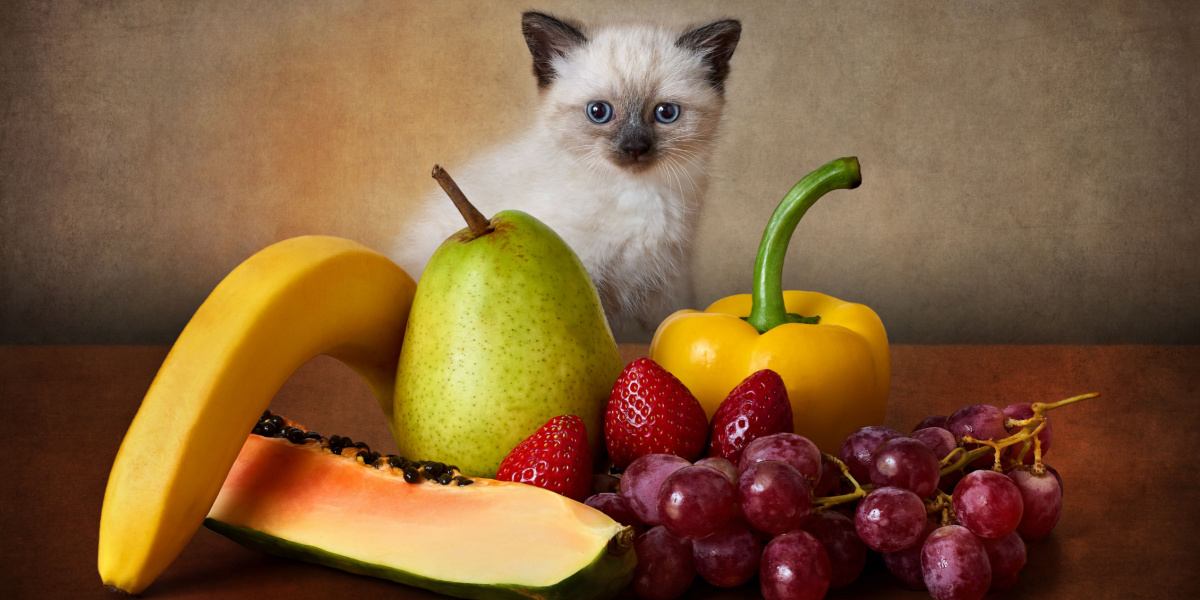
Which Fruits Can Cats Eat?

Quick-Reference Food Safety Chart

Food Safe? How Much Notes
Plain cooked chicken ✅ Yes Occasional treat Best protein option 
Plain cooked fish ✅ Yes Small amounts Avoid raw fish 
Cooked eggs ✅ Yes Occasional treat Scrambled or boiled 
Blueberries ✅ Yes 2–3 pieces, 1–2x/week High in antioxidants 
Strawberries ✅ Yes 1–2 pieces, rare High in sugar 
Bananas ✅ Yes Thin slices, rare Very high in sugar 
Apples ✅ Yes Small pieces, seeds removed Peel and remove seeds 
Cheese ⚠️ Rarely Tiny piece, occasional Most cats lactose-intolerant 
Chocolate ❌ NO NEVER Toxic, life-threatening 
Grapes/raisins ❌ NO NEVER Cause kidney failure 
Onions/garlic ❌ NO NEVER Cause anemia 
Alcohol ❌ NO NEVER Toxic poisoning 

Frequently Asked Questions

Q: My cat loves bananas — should I keep feeding them?

Bananas are safe but very high in sugar. Offer only thin slices as a rare treat, not a regular food. Your cat's preference doesn't override the nutritional risk of overfeeding.

Q: Can cats eat fruit daily?

No. Fruits should be offered 1–2 times per week at most, in amounts of 2–3 small pieces. Daily fruit feeding increases the risk of digestive upset and blood sugar issues.

Q: What do cats like to eat most?

The most universally appealing safe food for cats is plain, cooked chicken or turkey. This is the protein cats are naturally wired to crave and rarely fails to engage their interest.

Q: Does a cat groomer tool affect what cats eat?

Indirectly, yes. Enrichment tools — including a cat self groomer or self grooming cat house — reduce stress and boredom, two well-documented triggers for stress-eating and food fixation in indoor cats. A well-enriched cat is a calmer, more balanced eater.

Most of your cat's diet should be a nutritionally complete cat food, but you can safely offer small amounts of plain, cooked chicken, turkey, fish, eggs, and certain fruits like blueberries, strawberries, bananas, and apples as occasional treats. However, never feed your cat chocolate, grapes, raisins, onions, garlic, macadamia nuts, alcohol, or xylitol — these are toxic and can cause life-threatening illness. The key is knowing exactly what's safe, what's harmful, and how much your cat can handle.

What Do Cats Like to Eat? 

Cats are obligate carnivores by nature, meaning their instincts are wired to hunt and eat protein-rich prey like birds, small rodents, and insects. This is fundamentally different from dogs, which are omnivores capable of comfortably eating both plant and animal foods. Cats crave meat above all other foods, particularly high-protein, moist options like cooked chicken, turkey, salmon, or tuna.

Related reading: Can Cats Eat Dog Food?

When researchers studied feral cat diets in Australian grassland habitats, they found that cats naturally consume small prey animals — not grains, fruits, or vegetables. This explains why cats often show little interest in vegetarian foods and overwhelmingly prefer lean, moist meats.

However, there's also huge variation in individual taste preferences. Some cats love bananas (especially chilled), while others ignore them. Some cats will lick cheese, while others refuse dairy entirely. Others are fascinated by corn or polenta. These preferences are highly individual, but the biological baseline remains clear: cats are designed for protein, not plant matter.

Pro Tip from Pawswing: If you're wondering what your cat likes, try offering plain, cooked chicken or turkey in small amounts. This is the most universally appealing safe food for cats and rarely fails to engage their interest.

What Fruits Can Cats Eat?

What Human Food Can Cats Eat? Vet-Approved Foods for Occasional Treats

While cat food should always be your pet's primary diet, many people foods are safe for cats as rare, small treats. According to veterinary nutritionists and the American Veterinary Medical Association (AVMA), the following human foods are generally safe for cats in moderation:

Safe Proteins (Best Options)

  • Cooked plain chicken or turkey: Lean, boneless, skinless, unseasoned poultry is the top safe protein for cats
  • Cooked fish: Small amounts of plain, cooked salmon, tuna, or cod are safe and provide omega-3 fatty acids
  • Cooked eggs: Scrambled or boiled eggs are safe and offer protein-packed nutrition
  • Lean deli meats: Small bits of turkey or chicken deli meat (not beef or pork) are acceptable occasionally, but avoid high-salt varieties

Safe Pantry Foods

  • Pumpkin: Plain, cooked pumpkin (not pie filling) is rich in fiber and can help with digestion
  • Oats: Easy to prepare and high in protein per calorie
  • Brown rice, barley, millet, couscous: Cooked grains are safe, but may need to be mashed first for easier digestion
  • Whole wheat breadcrumbs: OK in small amounts

Safe Vegetables

  • Cucumber: Fresh, plain
  • Steamed broccoli: Plain, no seasoning
  • Carrots: Cooked, plain
  • Peas: Cooked, plain
  • Asparagus: Steamed, unseasoned

Safe Fruits (Occasional Treats)

  • Blueberries: High in antioxidants, safe whole or mashed
  • Strawberries: Rich in vitamin C and fiber, but high in sugar — offer occasionally
  • Bananas: High in potassium but very high in sugar — offer thin slices rarely
  • Apples: Safe if peeled and seeds removed
  • Watermelon: Seedless, remove rind
  • Cantaloupe: Fresh, plain
  • Blackberries: Safe and healthy in moderation

Related reading

Can Cats Eat Bananas? Safe Treats vs. Feline Nutrition Realities
Can Cats Eat Cheese? A Professional Feeding Guide for Cat Owners
Can Cats Eat Chocolate? No, Absolutely Forbidden
can cats eat strawberries or blueberries?

Safe Dairy (Very Rarely)

  • Cheese: Tiny pieces occasionally, but most cats are lactose-intolerant and can have digestive upset

    Important Rule: Treats (including human foods) should make up no more than 10% of your cat's daily caloric intake to ensure they receive the full benefits of their nutritionally balanced cat food diet.

Can Cats Eat Kiwi? Human Food for Cats

Should Cats Eat Fruit? 

The short answer: Cats don't need fruit, and it's not a natural part of their diet, but certain fruits can be safe as rare, small treats. Here's why:

Why Fruit Isn't Necessary for Cats

Cats are obligate carnivores by evolution. Their digestive systems are designed to extract nutrients from animal protein, not plant carbohydrates. Fruits contain high levels of sugar and carbohydrates, which cats don't metabolize efficiently. Too much fruit can lead to digestive upset, weight gain, and blood sugar fluctuations.

Which Fruits Are Safe (and Which Are Dangerous)

SAFE Fruits (in tiny amounts):

  • Blueberries, blackberries, cranberries — high in vitamins, fiber, and antioxidants
  • Strawberries, raspberries — rich in vitamin C and fiber, but high in sugar
  • Bananas — high in potassium, but very high in sugar
  • Apples — safe if peeled and seeds removed
  • Watermelon — seedless, rind removed
  • Cantaloupe — plain, fresh
  • Pineapple — fresh only, never canned (too much sugar and additives)

TOXIC Fruits (NEVER feed):

  • Grapes and raisins — cause acute kidney failure
  • Cherries — pits and stems contain cyanogenic compounds

Fruits should make up less than 10% of your cat's daily caloric intake, typically amounting to just 2–3 small pieces as an occasional treat, 1–2 times per week at most. Always remove seeds, pits, and rinds before serving.

What Cats Should NEVER Eat

The following foods are toxic to cats and can cause serious illness, organ failure, or death:

  • Chocolate — contains th eobromine and caffeine, which cause heart problems, seizures, and death
  • Grapes and raisins — cause rapid kidney failure
  • Onions and garlic — damage red blood cells, causing anemia
  • Macadamia nuts — cause gastrointestinal upset and weakness
  • Bread dough — expands in stomach, causes alcohol poisoning from yeast
  • Alcohol — even small amounts cause severe poisoning
  • Xylitol — artificial sweetener in gum and candy, causes rapid blood sugar drop and liver failure
  • Raw fish — can contain parasites and bacteria

If your cat eats any of these, contact your veterinarian or an emergency pet poison hotline immediately.

What Veterinary Science Recommends

The American Association of Feline Practitioners (AAFP) and the World Small Animal Veterinary Association (WSAVA) both emphasize that a nutritionally complete, species-appropriate cat food should be your pet's primary diet — and that human foods should only be offered as rare, small treats.

Peer-reviewed veterinary research confirms that cats benefit most from high-protein, low-carbohydrate diets with adequate moisture, and that filling cats with plant-based foods (including fruits and grains) does not provide meaningful nutritional value for their species-specific needs.

The AVMA also stresses that treats should never exceed 10% of daily caloric intake, as overfeeding treats is a primary driver of obesity and malnutrition in domestic cats.

Connecting Nutrition to Grooming: Why Brushing Cats Is Important

A cat's nutritional status is directly visible in their coat, skin, and grooming behavior. Cats fed adequate protein, essential fatty acids, and calories maintain glossy, full coats and exhibit active, vigorous self-grooming throughout the day. Overweight cats, or those fed poor-quality diets high in carbohydrates, often struggle to groom their backs and hindquarters — areas where matting, skin irritation, and parasite buildup are most common.

This is where the tools at Pawswing.com complement your feeding routine. A cat self groomer — a mounted brush station your cat can rub against independently — allows cats to reach areas they struggle with and maintain coat health without relying entirely on self-grooming flexibility. Our cat groomer accessories are designed to stimulate natural grooming instincts, reduce shedding and hairballs, and provide daily sensory enrichment that keeps indoor cats mentally engaged.

For cats that benefit from dedicated grooming spaces, our self grooming cat house integrates grooming brushes into a cozy habitat retreat — giving your cat a private corner where they can groom, nap, and decompress. When paired with a precise, species-appropriate feeding routine, enrichment tools like these complete the full picture of feline wellness.

Which Fruits Can Cats Eat?

Quick-Reference Food Safety Chart

Food Safe? How Much Notes
Plain cooked chicken ✅ Yes Occasional treat Best protein option 
Plain cooked fish ✅ Yes Small amounts Avoid raw fish 
Cooked eggs ✅ Yes Occasional treat Scrambled or boiled 
Blueberries ✅ Yes 2–3 pieces, 1–2x/week High in antioxidants 
Strawberries ✅ Yes 1–2 pieces, rare High in sugar 
Bananas ✅ Yes Thin slices, rare Very high in sugar 
Apples ✅ Yes Small pieces, seeds removed Peel and remove seeds 
Cheese ⚠️ Rarely Tiny piece, occasional Most cats lactose-intolerant 
Chocolate ❌ NO NEVER Toxic, life-threatening 
Grapes/raisins ❌ NO NEVER Cause kidney failure 
Onions/garlic ❌ NO NEVER Cause anemia 
Alcohol ❌ NO NEVER Toxic poisoning 

Frequently Asked Questions

Q: My cat loves bananas — should I keep feeding them?

Bananas are safe but very high in sugar. Offer only thin slices as a rare treat, not a regular food. Your cat's preference doesn't override the nutritional risk of overfeeding.

Q: Can cats eat fruit daily?

No. Fruits should be offered 1–2 times per week at most, in amounts of 2–3 small pieces. Daily fruit feeding increases the risk of digestive upset and blood sugar issues.

Q: What do cats like to eat most?

The most universally appealing safe food for cats is plain, cooked chicken or turkey. This is the protein cats are naturally wired to crave and rarely fails to engage their interest.

Q: Does a cat groomer tool affect what cats eat?

Indirectly, yes. Enrichment tools — including a cat self groomer or self grooming cat house — reduce stress and boredom, two well-documented triggers for stress-eating and food fixation in indoor cats. A well-enriched cat is a calmer, more balanced eater.

Related Post