


Yes — cats can eat both strawberries and blueberries in small, controlled amounts. Neither fruit is listed as toxic to cats by the ASPCA or major veterinary authorities. However, because cats are obligate carnivores, fruits provide little to no nutritional benefit for them, and moderation is absolutely essential to avoid digestive upset, obesity, or blood sugar issues.
Can Cats Eat Strawberries?
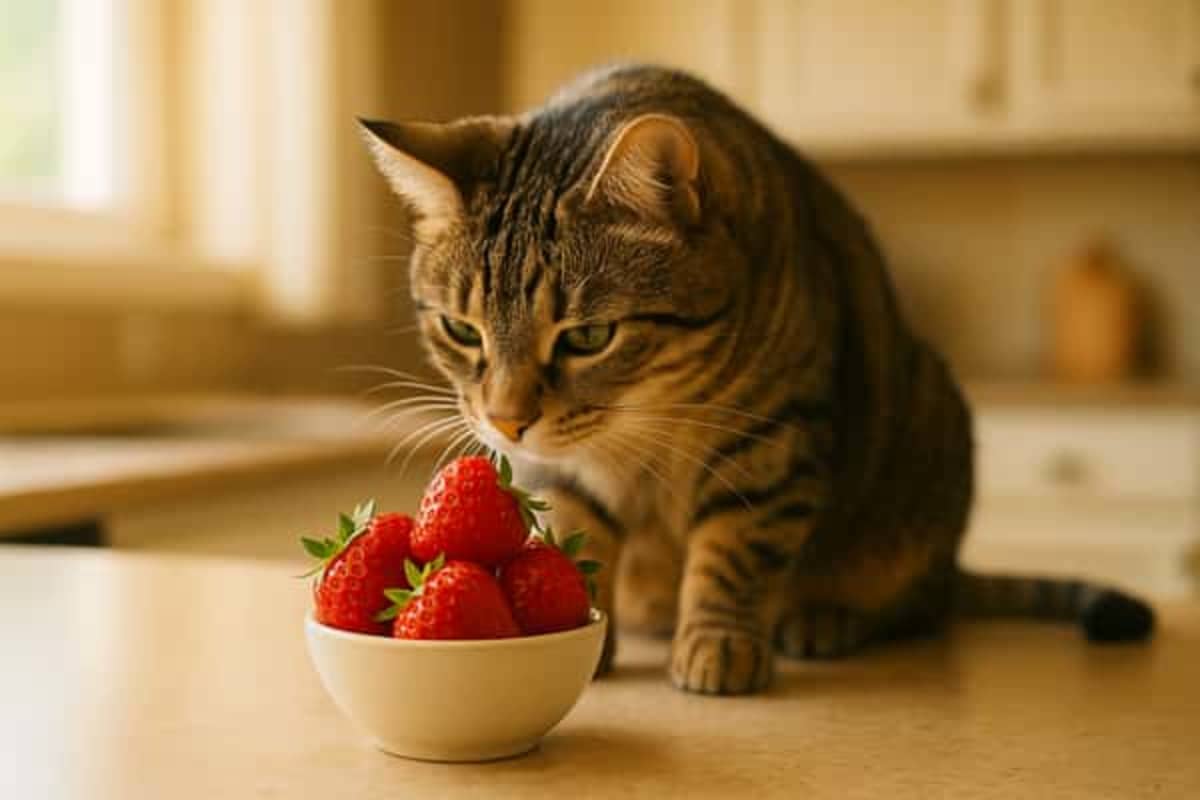
Strawberries are not toxic to cats, but they are not a necessary part of a feline diet. Cats lack sweet taste receptors, which means they cannot taste sweetness the way humans do — so that bright red berry you're excited about? Your cat probably doesn't even register the flavor the same way.
What you need to know about cats and strawberries:
- Safe in tiny amounts: One small piece, occasionally, is generally considered safe
- Remove the stem and leaves: The green tops can be a mild irritant to a cat's digestive system.
- High natural sugar content: Too much can cause digestive upset, diarrhea, or weight gain — especially for indoor cats.
- Not a health food for cats: Humans benefit from strawberry antioxidants and vitamin C, but cats synthesize their own vitamin C and don't need it from food sources.
- Watch for allergic reactions: Redness around the mouth, vomiting, or lethargy after eating a strawberry warrants a call to your vet.
Can Cats Eat Blueberries?
Blueberries are widely regarded as a "superfood" for humans, loaded with antioxidants and anthocyanins. For cats, they are similarly non-toxic and can be offered as an occasional treat — but the same caveats apply.
What you need to know about cats and blueberries:
- Non-toxic and ASPCA-approved as safe: Blueberries do not appear on the ASPCA's toxic plant/food list for cats
- Small size = lower choking risk: Blueberries are easier and safer to offer than larger fruits
- Antioxidant potential: Some holistic veterinarians suggest that the antioxidants in blueberries may offer mild immune support for cats, though peer-reviewed evidence for cats specifically remains limited
- Limit to 1–2 berries at a time: More than that can cause loose stools due to fiber and sugar content
- Avoid flavored or sweetened versions: Blueberry-flavored yogurts, muffins, or jams often contain xylitol, which is severely toxic to cats.

Veterinary Perspective: What Experts Say
Leading feline nutrition research confirms that cats are obligate carnivores — meaning animal protein is the cornerstone of a healthy feline diet. According to veterinary nutrition science, the key pillars of cat health are optimal protein intake, lean mass maintenance, and essential fatty acids — not fruits or plant-based snacks. Any fruit offering should be viewed purely as a rare treat, not a dietary supplement.
Pro Tip from Pawswing.com: If you're looking to enrich your cat's life beyond their bowl, focus on environmental enrichment — like a self grooming cat house or interactive toys — rather than dietary extras that offer limited feline benefit.
The Connection Between Diet and Cat Grooming Health
A well-nourished cat is a well-groomed cat. Protein-rich diets support coat quality, skin health, and the energy cats need for their famously meticulous self-grooming routines. When cats consume too many sugary or starchy foods — even "healthy" ones like fruit — it can lead to weight gain, lethargy, and reduced grooming activity.
This is where products like cat self-groomer become especially valuable. Automatic cat grooming devices allow your cat to groom itself all day, removing loose fur, reducing hairballs, and providing satisfying sensory stimulation.
Whether you're browsing our self-grooming cat house designs or our interactive enrichment accessories, every product is built around the same principle: healthy cats are happy cats, and happy cats groom themselves.
How to Safely Offer Strawberries or Blueberries to Your Cat
If you'd like to let your cat try a berry, follow these simple guidelines:
- Wash the fruit thoroughly to remove pesticides and surface bacteria.
- Cut into tiny, bite-sized pieces — no larger than your cat's kibble.
- Remove all stems, leaves, and seeds before offering.
- Offer only 1 small piece as a first-time test to check for reactions.
- Observe for 24 hours — watch for vomiting, diarrhea, or lethargy.
- Never exceed 10% of daily calories from treats of any kind, including fruit.
FAQs
-
Grapes and raisins — can cause acute kidney failure
-
Citrus fruits (oranges, lemons, limes) contain essential oils toxic to cats
-
Cherries — pits, stems, and leaves contain cyanogenic compounds
-
Avocado — contains persin, which can cause vomiting and diarrhea

About PawSwing
PawSwing specializes in cat grooming and fur care, combining smart technology with cats’ natural behaviors. We create thoughtful grooming solutions that make everyday care easier and more comfortable for cats and their families.
Get to know PawSwing


