Can Cats Eat Bananas? Safe Treats vs. Feline Nutrition Realities

Can Cats Eat Bananas? Safe Treats vs. Feline Nutrition Realities

Can Cats Eat Bananas? Safe Treats vs. Feline Nutrition Realities

As dedicated cat parents, we love sharing our lives—and sometimes our snacks—with our feline companions. You might be peeling a ripe banana for breakfast or a healthy mid-day snack, only to find your curious cat staring up at you with wide, inquisitive eyes. They sniff the fruit, maybe paw at it, and you find yourself wondering: Can cats eat bananas?

The short answer is yes, cats can eat bananas. Bananas are non-toxic to cats, meaning a small bite won't send you rushing to the emergency veterinary clinic. However, just because a food is safe or non-toxic doesn't necessarily mean it belongs in your cat's daily diet.

Because cats are obligate carnivores, their bodies process food very differently than humans or even dogs. In this comprehensive guide, we will explore the nutritional science behind feeding bananas to cats, the potential health benefits, the hidden risks (including sugar content), and how to safely introduce this fruit to your pet if they show interest.

The Obligate Carnivore Dilemma: Why Cats Don't Need Fruit

To understand why bananas are only a conditional treat for cats, we have to look at biological evolutionary history. Cats are classified as obligate carnivores. This means their bodies are anatomically and physiologically wired to thrive strictly on animal protein and fats.

In the wild, a cat’s diet consists almost entirely of prey, which provides very high amounts of protein, moderate fat, and almost zero carbohydrates. Consequently, a cat's digestive system produces low levels of the enzymes required to break down plant matter and complex carbohydrates.

Cats Lack a "Sweet" Tooth

An interesting evolutionary quirk is that cats are one of the few mammals that lack the taste receptors for sweetness. Due to a defect in the Tas1r2 gene, your cat cannot actually taste the sugary sweetness that makes a ripe banana so appealing to you. If your cat is begging for a bite of your banana, they are likely curious about the texture, the smell, or simply what their favorite human is eating—not the flavor itself.
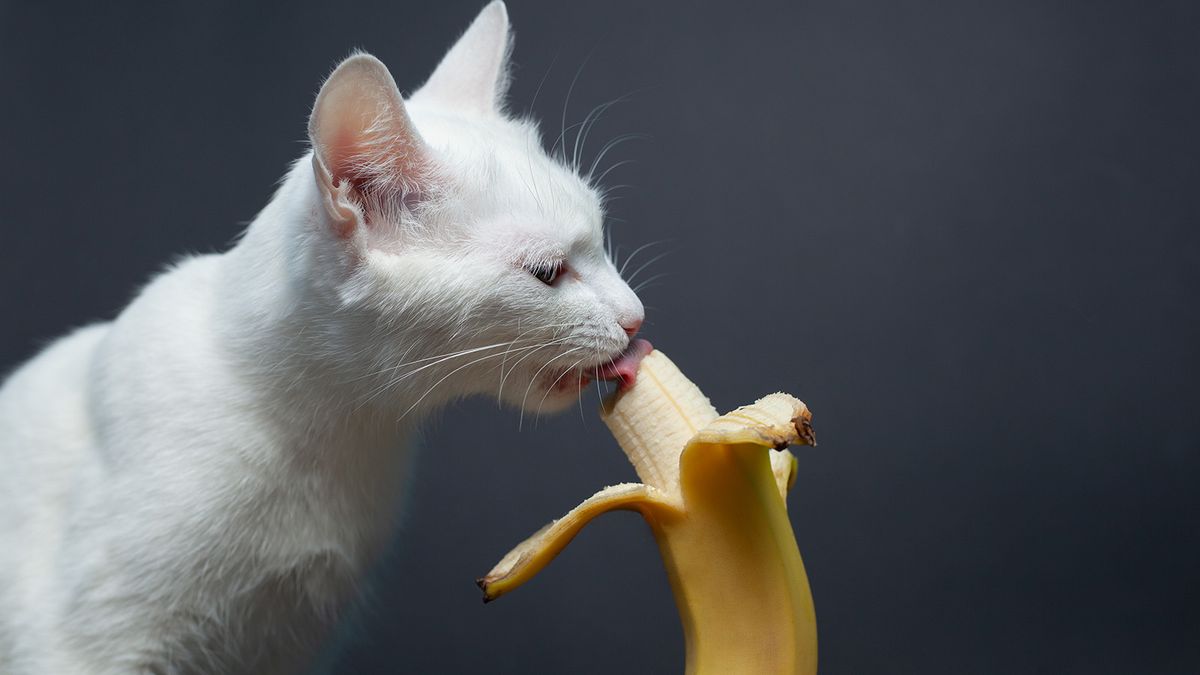
Can Cats Eat Bananas? How Much Banana Is Safe for a Cat? | HowStuffWorks

Do Bananas Offer Any Nutritional Benefits to Cats?

For humans, bananas are a world-renowned superfood packed with essential vitamins and minerals. When given to cats in strictly controlled, tiny quantities, some of these nutrients can theoretically offer minor health perks:

  • Potassium: This vital mineral supports heart health, regulates blood pressure, and aids muscular and nervous system function.
  • Vitamin B6 (Pyridoxine): Crucial for a cat's immune system, red blood cell function, and the assimilation of proteins.
  • Dietary Fiber: Small amounts of fiber can assist in regulating bowel movements and helping cats pass stubborn hairballs through their digestive tract.
  • Manganese and Vitamin C: Act as cellular antioxidants that help reduce oxidative stress and support metabolic functions.

However, there is a catch. Commercial high-quality cat foods are already perfectly balanced with all the potassium, vitamins, and protein your cat needs to survive and thrive. Your cat should never rely on fruits like bananas to meet their daily nutritional requirements.

Looking for a healthier treat for your obligate carnivore?

While bananas are okay for an occasional bite, nothing beats natural, meat-based treats that match your cat's evolutionary needs. Check out our range of freeze-dried, single-ingredient meat treats that cats absolutely go crazy for!

Shop Meat Treats for Cats

The Hidden Risks: When Are Bananas Bad for Cats?

While non-toxic, feeding bananas to your cat regularly carries several distinct health warnings. Understanding these risks will help you make the best decision for your pet's long-term wellness.

1. High Sugar and Carbohydrate Content

The primary concern with bananas is their high sugar and carbohydrate profile. A single medium-sized banana contains roughly 14 grams of sugar. For a human, this is natural fuel; for a 10-pound feline, it is a massive glucose overload.

Because a cat’s pancreas isn’t optimized to process heavy loads of carbohydrates, consistently feeding them sugary snacks can lead to rapid weight gain and obesity. More critically, chronic consumption of high-sugar treats significantly increases the risk of your cat developing feline diabetes, a complex health condition requiring lifelong insulin management.

2. Gastrointestinal Upset

Introducing any foreign food into a cat’s sensitive stomach can trigger digestive distress. If your cat consumes too much banana, or if their stomach reacts poorly to plant fiber, you may notice signs of gastrointestinal upset, including:

  • Vomiting
  • Diarrhea or extremely loose stools
  • Abdominal bloating and gas
  • Loss of appetite

3. Choking Hazards and Blockages

Cats do not chew their food the way humans do; their teeth are designed for tearing meat rather than grinding down soft matter. Large chunks of banana can easily become lodged in a cat's throat, presenting a dangerous choking hazard. Additionally, banana peels are strictly toxic and indigestible. If a cat ingests a piece of banana peel, it can cause a severe mechanical obstruction in their intestinal tract that may require emergency surgery.
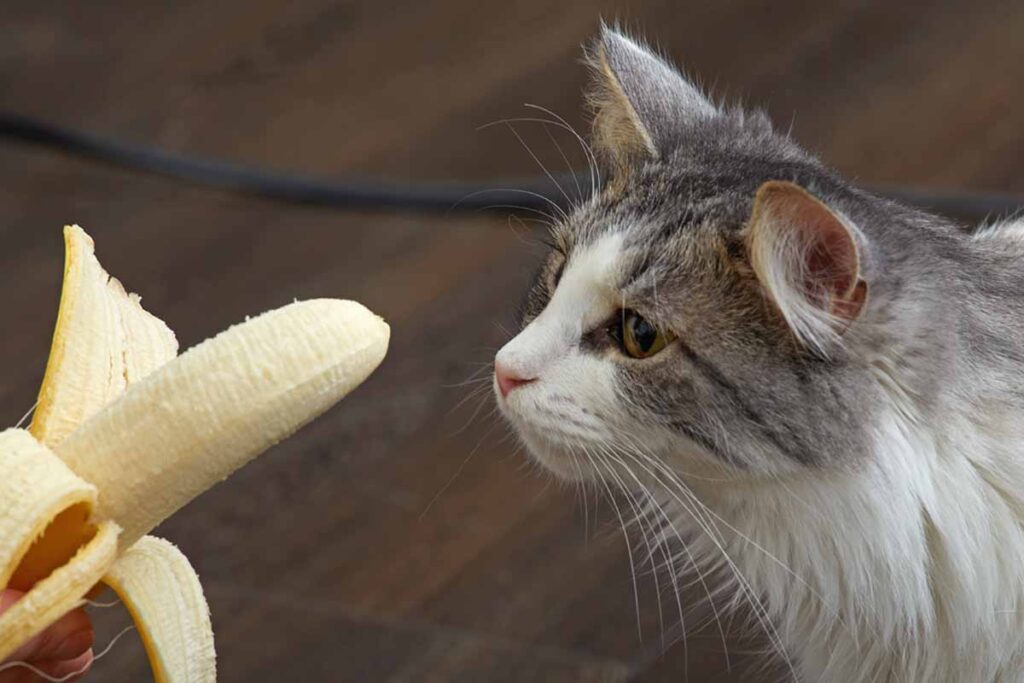
Image of grey and white fluffy cat looking at a banana

How to Safely Feed Bananas to Your Cat: The 10% Treat Rule

If your cat is absolutely obsessed with bananas and begs constantly, you can indulge them safely by adhering to strict veterinary feeding protocols.

Step-by-Step Serving Instructions

  1. Remove the Peel Entirely: Ensure there is absolutely no peel residue on the fruit, as it is a major choking and blockage hazard.
  2. Cut Into Tiny Pieces: Slice a piece of banana no larger than the size of a standard thumbnail or a single blueberry.
  3. Mash It Up (Optional): Mashing the banana into a smooth paste makes it much easier for your cat to lap up without any choking risk.
  4. Monitor for 24 Hours: If it's your cat's first time eating a banana, watch them closely for the next 24 hours for any signs of vomiting, diarrhea, or unusual lethargy.

The 10% Treat Rule

Veterinarians recommend that supplementary treats or "human foods" should never make up more than 10% of your cat’s total daily caloric intake. For an average adult cat requiring roughly 200 to 250 calories a day, a safe portion of banana should be restricted to a single tiny slice once or twice a week at most. It should never become a daily staple.

Feline Fruit Safety Reference Guide

Bananas aren't the only fruits pulling at your cat's curiosity. To help you navigate your kitchen safely, here is a quick glance breakdown of which fruits are safe and which ones are strictly dangerous to felines:

Fruit Safety Status Important Veterinary Notes
Bananas Moderate Treat Safe but high in sugar. Give in tiny, bite-sized amounts. Remove peel.
Blueberries Safe Rich in antioxidants. Many cats enjoy the cool texture of frozen blueberries.
Strawberries Safe Non-toxic in small doses, but must remove the green stems and leaves.
Grapes & Raisins STRICTLY TOXIC Can cause acute, irreversible kidney failure in cats even in tiny amounts. Never feed.
Citrus (Lemons/Oranges) STRICTLY TOXIC Essential oils and psoralens in citrus fruits cause extreme vomiting and central nervous system depression.

Conclusion: Keep the Banana Bites Small and Rare

To recap: can cats eat bananas safely? Yes, they absolutely can. But should bananas become a regular feature in their food bowl? Definitely not.

Think of bananas as an occasional, microscopic indulgence for a curious pet. If your cat bites a piece of dropped banana from the floor, relax—they will be completely fine. But if you want to optimize your cat’s vitality, longevity, and coat health, always prioritize single-ingredient, meat-based snacks that cater to their predatory, carnivorous biology.

When in doubt about introducing new foods to your pet's routine, always have a quick conversation with your local veterinarian to ensure it matches your cat's specific health profile!

As dedicated cat parents, we love sharing our lives—and sometimes our snacks—with our feline companions. You might be peeling a ripe banana for breakfast or a healthy mid-day snack, only to find your curious cat staring up at you with wide, inquisitive eyes. They sniff the fruit, maybe paw at it, and you find yourself wondering: Can cats eat bananas?

The short answer is yes, cats can eat bananas. Bananas are non-toxic to cats, meaning a small bite won't send you rushing to the emergency veterinary clinic. However, just because a food is safe or non-toxic doesn't necessarily mean it belongs in your cat's daily diet.

Because cats are obligate carnivores, their bodies process food very differently than humans or even dogs. In this comprehensive guide, we will explore the nutritional science behind feeding bananas to cats, the potential health benefits, the hidden risks (including sugar content), and how to safely introduce this fruit to your pet if they show interest.

The Obligate Carnivore Dilemma: Why Cats Don't Need Fruit

To understand why bananas are only a conditional treat for cats, we have to look at biological evolutionary history. Cats are classified as obligate carnivores. This means their bodies are anatomically and physiologically wired to thrive strictly on animal protein and fats.

In the wild, a cat’s diet consists almost entirely of prey, which provides very high amounts of protein, moderate fat, and almost zero carbohydrates. Consequently, a cat's digestive system produces low levels of the enzymes required to break down plant matter and complex carbohydrates.

Cats Lack a "Sweet" Tooth

An interesting evolutionary quirk is that cats are one of the few mammals that lack the taste receptors for sweetness. Due to a defect in the Tas1r2 gene, your cat cannot actually taste the sugary sweetness that makes a ripe banana so appealing to you. If your cat is begging for a bite of your banana, they are likely curious about the texture, the smell, or simply what their favorite human is eating—not the flavor itself.

Can Cats Eat Bananas? How Much Banana Is Safe for a Cat? | HowStuffWorks

Do Bananas Offer Any Nutritional Benefits to Cats?

For humans, bananas are a world-renowned superfood packed with essential vitamins and minerals. When given to cats in strictly controlled, tiny quantities, some of these nutrients can theoretically offer minor health perks:

  • Potassium: This vital mineral supports heart health, regulates blood pressure, and aids muscular and nervous system function.
  • Vitamin B6 (Pyridoxine): Crucial for a cat's immune system, red blood cell function, and the assimilation of proteins.
  • Dietary Fiber: Small amounts of fiber can assist in regulating bowel movements and helping cats pass stubborn hairballs through their digestive tract.
  • Manganese and Vitamin C: Act as cellular antioxidants that help reduce oxidative stress and support metabolic functions.

However, there is a catch. Commercial high-quality cat foods are already perfectly balanced with all the potassium, vitamins, and protein your cat needs to survive and thrive. Your cat should never rely on fruits like bananas to meet their daily nutritional requirements.

Looking for a healthier treat for your obligate carnivore?

While bananas are okay for an occasional bite, nothing beats natural, meat-based treats that match your cat's evolutionary needs. Check out our range of freeze-dried, single-ingredient meat treats that cats absolutely go crazy for!

Shop Meat Treats for Cats

The Hidden Risks: When Are Bananas Bad for Cats?

While non-toxic, feeding bananas to your cat regularly carries several distinct health warnings. Understanding these risks will help you make the best decision for your pet's long-term wellness.

1. High Sugar and Carbohydrate Content

The primary concern with bananas is their high sugar and carbohydrate profile. A single medium-sized banana contains roughly 14 grams of sugar. For a human, this is natural fuel; for a 10-pound feline, it is a massive glucose overload.

Because a cat’s pancreas isn’t optimized to process heavy loads of carbohydrates, consistently feeding them sugary snacks can lead to rapid weight gain and obesity. More critically, chronic consumption of high-sugar treats significantly increases the risk of your cat developing feline diabetes, a complex health condition requiring lifelong insulin management.

2. Gastrointestinal Upset

Introducing any foreign food into a cat’s sensitive stomach can trigger digestive distress. If your cat consumes too much banana, or if their stomach reacts poorly to plant fiber, you may notice signs of gastrointestinal upset, including:

  • Vomiting
  • Diarrhea or extremely loose stools
  • Abdominal bloating and gas
  • Loss of appetite

3. Choking Hazards and Blockages

Cats do not chew their food the way humans do; their teeth are designed for tearing meat rather than grinding down soft matter. Large chunks of banana can easily become lodged in a cat's throat, presenting a dangerous choking hazard. Additionally, banana peels are strictly toxic and indigestible. If a cat ingests a piece of banana peel, it can cause a severe mechanical obstruction in their intestinal tract that may require emergency surgery.

Image of grey and white fluffy cat looking at a banana

How to Safely Feed Bananas to Your Cat: The 10% Treat Rule

If your cat is absolutely obsessed with bananas and begs constantly, you can indulge them safely by adhering to strict veterinary feeding protocols.

Step-by-Step Serving Instructions

  1. Remove the Peel Entirely: Ensure there is absolutely no peel residue on the fruit, as it is a major choking and blockage hazard.
  2. Cut Into Tiny Pieces: Slice a piece of banana no larger than the size of a standard thumbnail or a single blueberry.
  3. Mash It Up (Optional): Mashing the banana into a smooth paste makes it much easier for your cat to lap up without any choking risk.
  4. Monitor for 24 Hours: If it's your cat's first time eating a banana, watch them closely for the next 24 hours for any signs of vomiting, diarrhea, or unusual lethargy.

The 10% Treat Rule

Veterinarians recommend that supplementary treats or "human foods" should never make up more than 10% of your cat’s total daily caloric intake. For an average adult cat requiring roughly 200 to 250 calories a day, a safe portion of banana should be restricted to a single tiny slice once or twice a week at most. It should never become a daily staple.

Feline Fruit Safety Reference Guide

Bananas aren't the only fruits pulling at your cat's curiosity. To help you navigate your kitchen safely, here is a quick glance breakdown of which fruits are safe and which ones are strictly dangerous to felines:

Fruit Safety Status Important Veterinary Notes
Bananas Moderate Treat Safe but high in sugar. Give in tiny, bite-sized amounts. Remove peel.
Blueberries Safe Rich in antioxidants. Many cats enjoy the cool texture of frozen blueberries.
Strawberries Safe Non-toxic in small doses, but must remove the green stems and leaves.
Grapes & Raisins STRICTLY TOXIC Can cause acute, irreversible kidney failure in cats even in tiny amounts. Never feed.
Citrus (Lemons/Oranges) STRICTLY TOXIC Essential oils and psoralens in citrus fruits cause extreme vomiting and central nervous system depression.

Conclusion: Keep the Banana Bites Small and Rare

To recap: can cats eat bananas safely? Yes, they absolutely can. But should bananas become a regular feature in their food bowl? Definitely not.

Think of bananas as an occasional, microscopic indulgence for a curious pet. If your cat bites a piece of dropped banana from the floor, relax—they will be completely fine. But if you want to optimize your cat’s vitality, longevity, and coat health, always prioritize single-ingredient, meat-based snacks that cater to their predatory, carnivorous biology.

When in doubt about introducing new foods to your pet's routine, always have a quick conversation with your local veterinarian to ensure it matches your cat's specific health profile!

Related Post