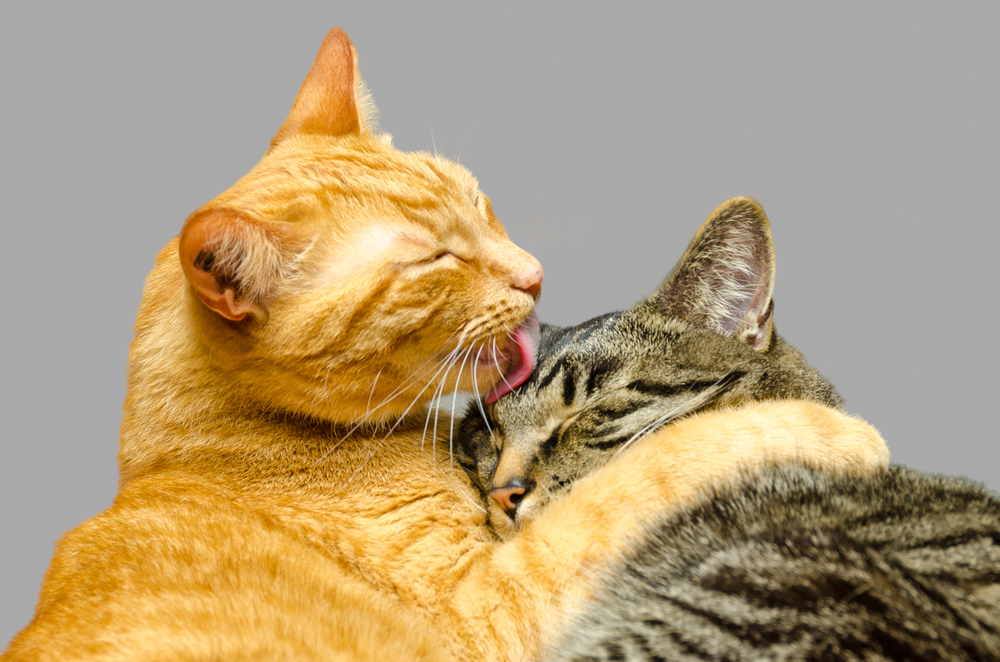
When you see two cats gently licking each other's fur, it's one of the most heartwarming sights in the cat world. But why do cats groom each other? This behavior, called allogrooming, isn't just about cleanliness—it's a complex social behavior that reveals deep truths about cat relationships.
Cats that groom each other typically have a close bond and view each other as friends. Whether it's affection, trust, or the establishment of social structure, this mutual grooming reveals a lot about your cats' relationship.
4 Key Reasons Why Cats Groom Each Other
1. Bonding & Affection: The Primary Reason
Felines are social creatures, and grooming each other is the perfect bonding activity. Cats groom each other to express social bonds and affection, according to Steve Dale, CABC.
- Shows trust and friendship—Mutual grooming (allogrooming) is a clear sign of affection
- Strengthens social networks—Licking helps cats build relationships and establish social connections
- Mother-kitten bonding—Mothers groom kittens to bond before they learn self-grooming
- Creates unified group scent—Licking transfers each cat's scent, marking them as part of the same social group
When cats groom each other, they're not just cleaning; they're sharing scents to create a unified group smell. This group scent fosters community and reduces aggression in multi-cat homes.
2. Hygiene Help: Cleaning Hard-to-Reach Areas
While cats are meticulous at cat self grooming, they may struggle to reach certain areas. Licking each other helps clean hard-to-reach spots like the back of the neck, ensuring both cats stay clean and healthy.
Cats will groom one another to:
- Remove dirt, debris, and parasites from fur
- Reduce infection chances
- Clean areas they can't reach themselves
Although felines can clean themselves completely, a grooming session from another cat provides additional health benefits.
Related reading: Why do cats groom themselves?
3. Stress Relief: Natural Mood Enhancement
Grooming can be a soothing activity that helps reduce stress and provide comfort. The repetitive movement often feels relaxing for both the groomer and the recipient.
How it works:
- The act releases endorphins—natural mood enhancers
- Helps cats relax and promotes a calm environment
- Provides comfort during tense situations
Even though cats only groom each other if they're friends, it can serve as tension relief after conflicts.
4. Hierarchy & Dominance: Social Structure Indicator
In multi-cat households, grooming can indicate social hierarchy. Researchers found that "higher-ranking" cats are more likely to groom lower-ranking cats, similar to how mothers groom kittens.
However, what looks like "dominance" may simply be cats with different personalities—demanding cats letting laid-back ones have their way.

When Cats Groom You: Special Significance
Your cat may even try to groom you by licking your arms or combing your hair with its paws—clear signs of trust and love. When a cat allows another to groom them, it shows trust.
Support Your Cat's Grooming Needs
Whether your cat prefers self-grooming or enjoys mutual grooming with a companion, supporting their natural habits is essential for their health and happiness.
Consider a Cat Self-Groomer for Busy Owners
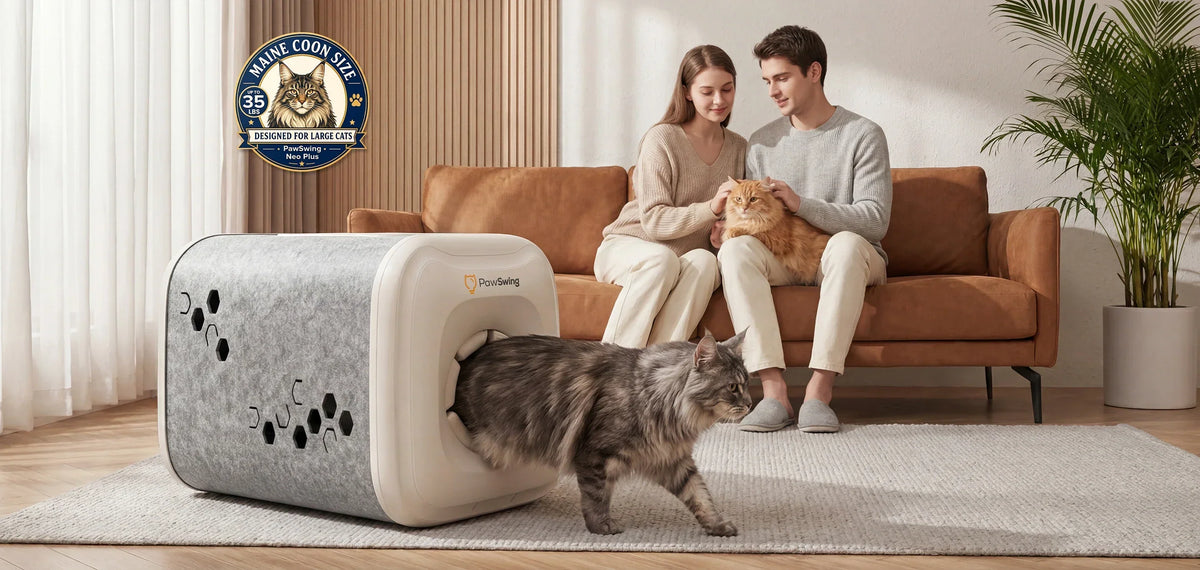
For cat owners who can't brush daily, a cat self groomer offers innovative solutions:
- PawSwing Pro (automatic cat groomer): 90% less indoor hair, silent operation, treat dispenser
- Self grooming cat house: Cats groom themselves by entering the shelter
- Benefits: Reduces shedding, keeps cats comfortable, fits beautifully into homes
A professional cat groomer can also detect bugs, reduce allergens, and make cats more comfortable with human handling.
Conclusion
Understanding why cats groom each other helps you support their natural social behaviors and recognize when grooming becomes problematic. Whether through cat self-grooming alone or mutual allogrooming, grooming is essential to your cat's health, happiness, and social connections.
For busy cat owners wanting to reduce shedding without daily brushing, consider an automatic cat groomer like PawSwing Pro—90% less hair, completely silent, and your cat will enjoy the treat rewards.
Frequently Asked Questions (FAQs)
Q1: Why do cats groom each other's heads?
Cats primarily groom the head and neck region (66.4% of allogrooming occurs there). These areas are hard for cats to reach themselves and are social bonding zones.
Q2: Is it normal for cats to groom each other?
Yes, allogrooming is completely normal for bonded cats. It indicates friendship, trust, and strong social bonds.
Q3: Do all cats groom each other?
No, cats only groom each other if they're friends and bonded. Unbonded cats typically avoid this behavior.
Q4: Can allogrooming indicate dominance?
Yes, in some cases. Dominant cats often initiate grooming to assert position, while submissive cats tolerate it. However, if cats take turns, they're likely equals.
Q5: What if my cat grooms me?
This is a sign of affection and trust. Your cat views you as part of their social group and is expressing love.
Q6: Should I worry if my cat grooms excessively?
Excessive grooming may indicate stress, anxiety, pain, or medical issues. Watch for bald spots, skin irritation, or sudden behavior changes.
Q7: How does allogrooming help with stress?
Grooming releases endorphins (natural mood enhancers), helping cats relax and creating a calm environment.
Q8: Can I encourage my cats to groom each other?
Not directly, but you can create a stress-free environment where bonding occurs naturally. Ensure both cats have safe spaces and positive experiences together.
Q9: Does grooming help with cat self grooming?
Yes! While cats excel at self-grooming, mutual grooming helps clean areas they can't reach, providing additional hygiene benefits.
Q10: When should I consult a vet about grooming?
Contact your vet if you notice:
- Excessive grooming leading to bald spots
- Skin irritation or lesions
- Sudden changes in grooming patterns
- Aggression during grooming sessions